
The Explorer’s Standard: How Real Estate Agents Can Lead Through Uncertainty and Build a Seven-Figure Business
You do not need a new market. You need the courage, preparation, and daily execution to lead in the market you have.
Every real estate agent has an ocean to cross.
For some, it is building a stronger pipeline. For others, it is learning to lead difficult client conversations, recruiting the right people, improving conversion, or finally executing a strategy they have been talking about for months.
The challenge is rarely a complete lack of information. Most agents already have a CRM, scripts, market updates, coaching notes, and a plan. What separates intention from progress is whether those resources translate into consistent action.
A map alone never crossed an ocean. The map has to become movement. — Coach Pipes
That is the foundation of the Explorer’s Standard: approaching real estate with the mindset to face uncertainty, the skillset to lead conversations effectively, and the workset to execute consistently.
Inspired by the discipline and uncertainty associated with exploration, this framework offers five principles for building a stronger real estate business without waiting for perfect conditions.
01 / A Map Is Not the Journey
Strategy matters. Execution moves the ship.
It is easy to confuse preparation with progress.
You can spend hours reviewing market updates, organizing your CRM, studying scripts, attending coaching sessions, and planning your next business move. Those activities can be valuable, but they do not automatically create results.
The question is not whether you have a plan. It is whether your calendar shows that you are acting on it.
If your goal is to secure more listings, what conversations are you having today? If you want to grow your team, when are you speaking with potential recruits? If your conversion rate needs improvement, when are you practicing the conversations that could change it?
Your calendar reveals whether your priorities are translating into behavior.
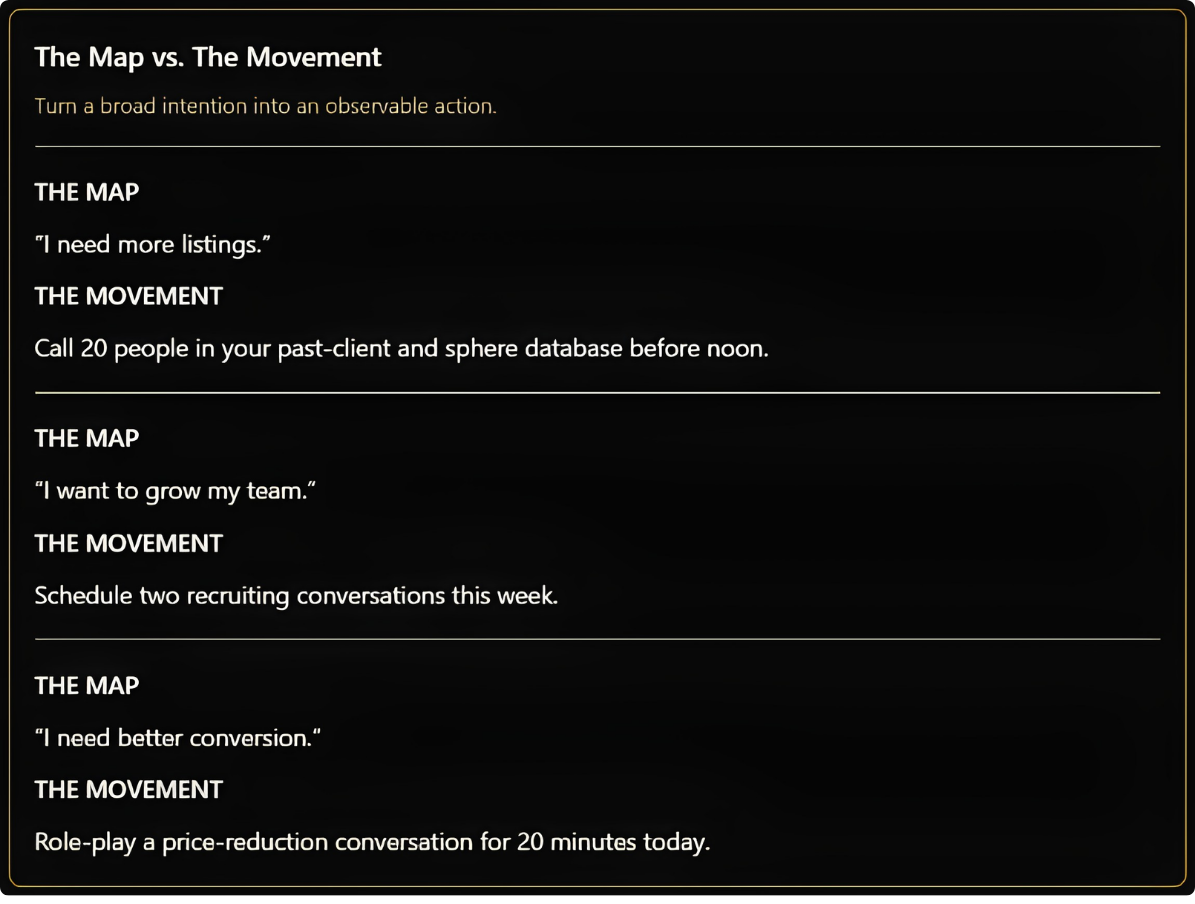
The principle is straightforward: every important business goal needs a corresponding action that can be scheduled, completed, and reviewed.
A plan without protected activity is just a sophisticated excuse.
02 / You Cannot Navigate by Comfort
Feelings are real. They are not the captain.
Real estate markets change. Interest rates move, inventory shifts, consumers hesitate, and competition intensifies. These conditions can create legitimate challenges, but they do not remove the need for leadership.
The same applies to your internal state.
If you wait until you feel completely confident before prospecting, you can spend a long time waiting. Confidence often develops through repeated action, not before it.
The uncomfortable action might be calling an expired listing, telling a seller the truth about price, following up for the fifth time with relevance and respect, or asking a buyer what needs to be true for them to feel ready to make a decision.
The goal is not to pressure people into doing what you want. It is to help them think clearly, create clarity around their options, and earn an honest next step.

The conversation you have been avoiding
Think about the one professional conversation you keep postponing. It might involve a seller, a lead, a client, or a potential recruit.
Identify the conversation and decide exactly when you will initiate it. A vague intention to “get to it this week” leaves room for further negotiation. A scheduled commitment gives the action a place in your day.
The objective is not to eliminate uncertainty. It is to learn how to act responsibly while uncertainty is still present.
03 / Preparation Is Respect
Courage gets you into the conversation. Preparation helps you lead it.
Enthusiasm alone does not qualify someone to guide a client through a major decision. Real estate professionals earn that responsibility by preparing to handle the questions, objections, and circumstances that can arise.
Prepared agents understand the inventory and financing realities relevant to their clients. They anticipate objections, practice difficult conversations before those conversations happen, track their pipeline, and review which language works and which language needs to change.
Preparation does not mean knowing every possible answer. It means taking the responsibility seriously enough to improve your ability to respond.
The G3 standard brings three elements together:
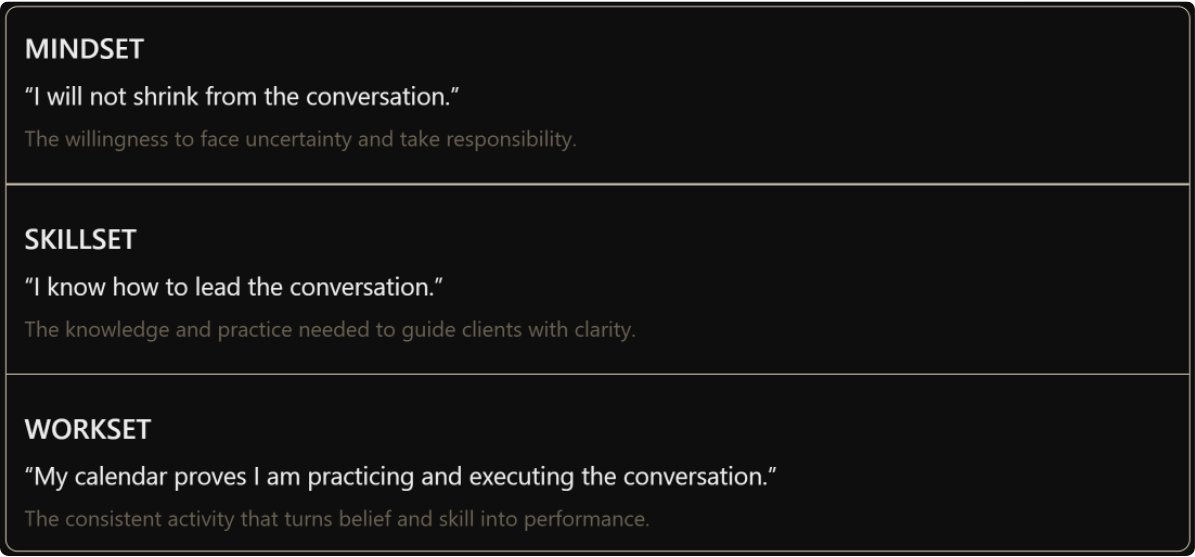
These three elements depend on one another. Belief without skill can cost you opportunities. Skill without action does not create a pipeline. Activity without integrity can damage trust.
Preparation connects confidence to competence. It helps you enter important conversations with a stronger understanding of what the client needs and how you can help.
Preparation is not perfectionism. It is respect for your client, your team, and your future.
04 / The Crew Matters
Ambition can begin with one person. Sustainable leadership requires more.
No meaningful expedition depends on enthusiasm alone. People need clear roles, shared standards, communication, and accountability. A real estate business is no different.
For team leaders, culture is not defined by what is written on a wall. People observe what their leader consistently does and tolerates. They notice whether follow-up happens, whether clients are treated respectfully, whether missed standards are addressed, and whether the scoreboard reflects reality.
Leadership is demonstrated through behavior long before it is described in a meeting.
Individual agents need a crew, too. A coach, accountability partner, lender partner, vendor, or trusted colleague can offer perspective and challenge assumptions that are difficult to see alone.
The important question is not simply who is around you. It is whether the relationships in your professional environment reinforce the standards you are trying to build.
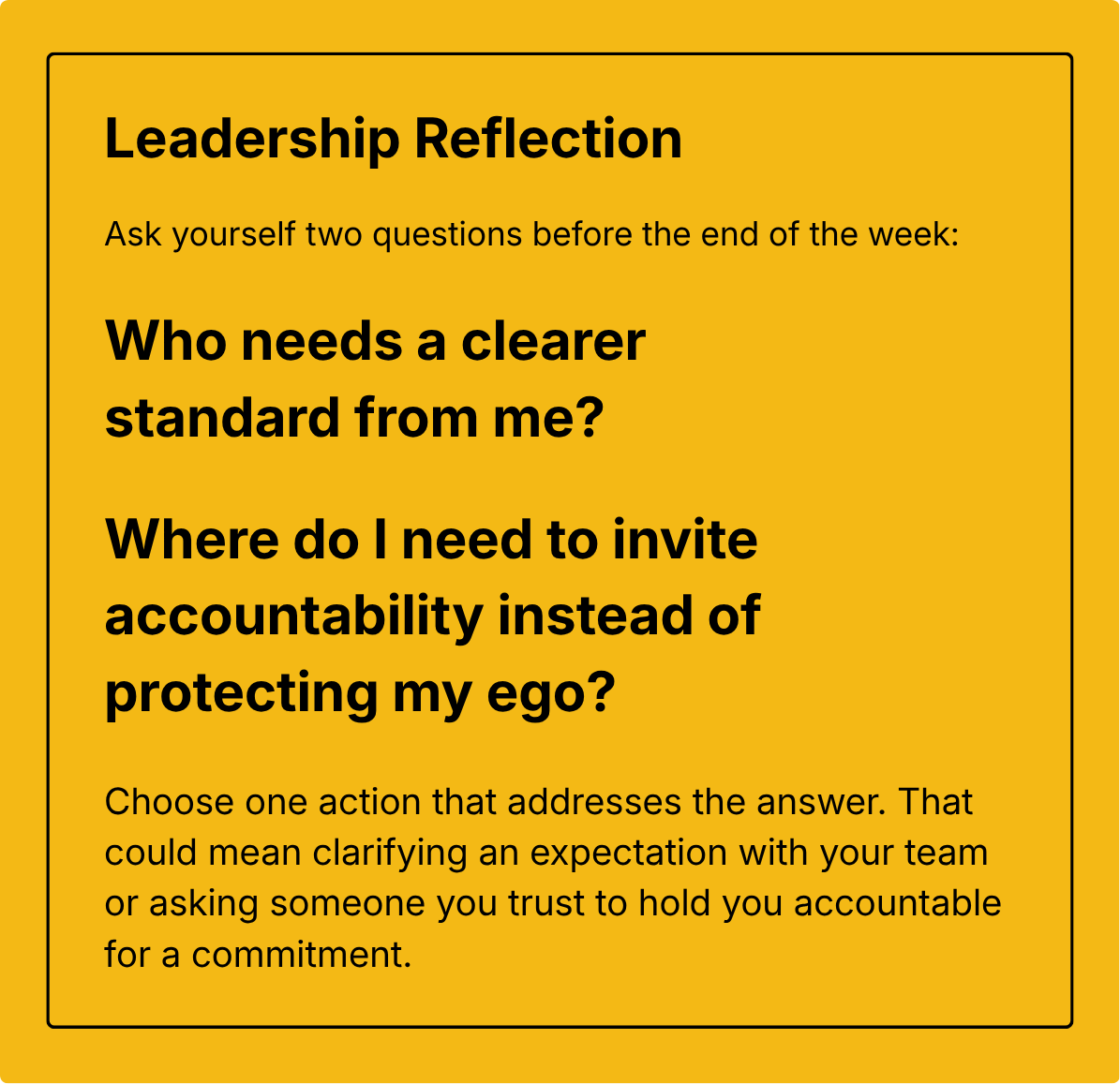
Accountability is not about finding someone to cheer you on. It is about creating an environment where commitments are visible and follow-through matters.
Isolation protects excuses. Community exposes them, then helps you outwork them.
05 / Adjust the Course, Not the Commitment
Conditions change. Your mission should remain clear.
A strong navigator does not pretend the wind is staying the same. They read the conditions, adjust the sail, and correct their course without abandoning the mission every time the water gets rough.
Real estate businesses require the same judgment.
You may need to change your message, lead source, schedule, follow-up cadence, pricing conversation, hiring decision, or approach to serving your market. Adjustments are part of operating a business.
The challenge is recognizing the difference between adapting to evidence and abandoning a strategy because it has become uncomfortable.
Sometimes agents change direction because the numbers show that something is not working. Other times, they change direction because they have not stayed with the original strategy long enough to develop the skill required to make it work.
Do not confuse impatience with adaptation.
Before chasing the next strategy, inspect the execution chain.
1. Are you creating enough relevant conversations? Check whether you are doing enough of the activity that generates opportunities.
2. Are you prepared to lead those conversations? Examine your knowledge, scripts, objection handling, and ability to create clarity.
3. Are you following up consistently? Continue until there is a clear next step or an honest no, rather than abandoning the conversation prematurely.
4. Are you tracking the activity and reviewing the numbers? Use what the results tell you to identify where the process needs to change.
This gives you a more disciplined way to diagnose problems. Instead of replacing the entire strategy every time results disappoint you, identify the broken link and correct it.
Adjust the sails. Keep the standard.
The Explorer's Commitment
The five principles become useful when they change what you do today.
You do not need to leave this article with ten new goals or an entirely redesigned business plan. You need one purposeful action that moves you toward the business you want to build.
Use this commitment:
WRITE YOUR COMMITMENT |
|---|
Before ______ today, I will ______ for ______ minutes because the future business I want requires me to lead now. |
Examples from the G3 Explorer's Standard: |
Before 11:00 a.m., I will call my past-client list for 45 minutes because the business I want requires a stronger referral engine. Before 3:00 p.m., I will role-play three price-reduction conversations for 30 minutes because my clients deserve truth delivered with skill. Before the day ends, I will follow up with five active opportunities for 30 minutes because service requires consistency. |
Make the commitment observable and put it on your calendar. Then share it with one person who can check whether you completed it. The point is to turn an intention into an action that has a time, a duration, and a clear result.
The Explorer's Standard at a Glance
Principle | Your standard |
|---|---|
A map is not the journey | Convert your plan into protected activity. |
You cannot navigate by comfort | Take the necessary action even when it feels uncomfortable. |
Preparation is respect | Develop the skills to lead conversations well. |
The crew matters | Build clear standards and invite accountability. |
Adjust the course, not the commitment | Use evidence to improve your approach without abandoning the mission prematurely. |
Leave the Shore
The market does not need more spectators. Clients need professionals who remain present when conditions become difficult. Teams need leaders who model the standards they expect. And the business you want requires more than a goal you revisit whenever you feel inspired.
It requires the mindset to face uncertainty, the skillset to create clarity, and the workset to execute when nobody is watching.
Building a seven-figure business that supports a seven-figure life is not about chasing a fantasy horizon. It is about disciplined action, service, integrity, and contribution in the market you have today.
Do not stand on the shore explaining the ocean.
Schedule the move. Make the call. Lead the conversation.
Make today count.
- Coach Pipes